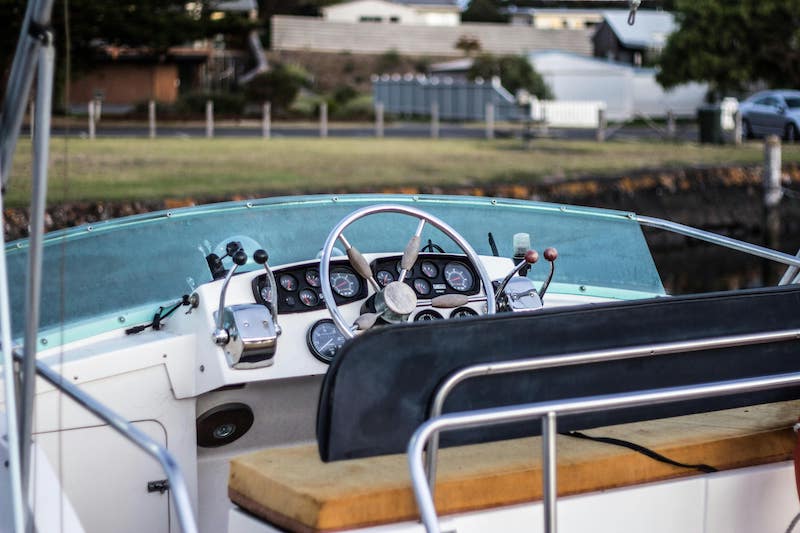

A tender is the piece of kit you use more than almost anything else on board, and the one most owners think about last. It carries you from the mooring to the quay, from the anchorage to the beach, from the boat to a mate's transom at aperitif hour. Get it right and it barely registers as a decision. Get it wrong and you'll spend the season wet, underpowered, or wrestling a slab of hypalon onto the foredeck in a swell. This guide walks through how to match a tender and outboard to the way you actually use your boat, not to the brochure fantasy.
Start with how you actually use it
Before you look at a single hull or powerhead, be honest about the job. A tender for a 12 m cruising sloop that anchors in Mediterranean coves is not the same tender as one for a charter catamaran doing week-long turnarounds in the Balearics, and neither is the same as a hard dinghy left on davits behind a coastal motor cruiser.
Ask yourself:
- How many people, how often ? Two adults ashore for baguettes is a very different load from four adults plus dive kit and a cooler.
- How far are you actually going ? 200 m across a marina, or 3 nautical miles round the headland to a restaurant ?
- Where does it live ? Davits, foredeck chocks, rolled in a locker, or towed ?
- Beach landings ? If yes, a soft floor and a light package matter more than top speed.
- Night use ? Then nav lights, a proper torch, and a VHF handheld are not optional.
The tender is a system : hull, floor, outboard, fuel, and stowage. Optimise one at the expense of the others and you'll notice.
Choosing the hull: RIB, roll-up, air floor, or hard
Four broad families, each with a clear job.
Roll-up inflatables (slatted floor). Lightest, cheapest, easiest to stow. Typically 2.3 to 2.7 m. Fine for short hops with two people and a 2 to 3.5 hp outboard. Won't plane meaningfully with a load, and the floor flexes underfoot. Good spare tender or minimalist cruiser choice.
High-pressure air floor (HP floor). The sweet spot for most cruising boats. Rigid enough to plane with the right power, still packs into a bag, and typically weighs 30 to 45 kg for a 2.7 to 3.2 m model. Good compromise if the tender lives in a locker or on the foredeck.
Fibreglass or aluminium RIB. The proper working tender. Rigid hull, real V, handles chop, tows well, planes readily. Downsides : it needs davits or a chock, it's heavy, and it costs. If you spend real time in it, or you run a charter operation with paying guests, a RIB is almost always the right answer.
Hard dinghies (fibreglass or wood). Row beautifully, look right on a classic yacht, last forever. Poor payload for their size and awkward on a modern deck. A niche choice, but a good one if it fits your programme.
Payload capacity on the manufacturer's plate is a legal maximum, not a working recommendation. In chop, plan on 70 to 80 % of that number if you actually want to stay dry.
Sizing the outboard: power, weight, and honesty
Every inflatable has a maximum rated power stamped on the transom plate. That's a ceiling, not a target. The right outboard is the smallest one that gets your typical load onto the plane in the conditions you actually sail in.
Rough guidance, and it is only guidance :
- 2.3 to 2.5 m roll-up, 1 to 2 people : 2.5 to 3.5 hp. Displacement mode only. Light enough to lift onto the pushpit bracket with one hand.
- 2.7 to 3.0 m air floor, 2 to 3 people : 5 to 8 hp. Will plane with two, struggle with three plus kit.
- 3.1 to 3.4 m air floor or light RIB, 3 to 4 people : 9.9 to 15 hp. The workhorse range for cruising couples with occasional guests.
- 3.4 m and up RIB, 4+ people : 15 to 30 hp. Now you're into serious weight, electric start, remote steering territory.
Weight matters as much as horsepower. A 15 hp four-stroke is often 45 to 50 kg. Can you actually lift that from the transom bracket to the dinghy, alone, at anchor, in a beam swell ? If not, drop to a 9.9 or 8 hp, or invest in a proper hoist. A back injury in a remote anchorage ruins a season.
Two-stroke vs four-stroke : two-strokes are lighter and simpler, but new units are hard to find in the EU due to emissions rules. Four-strokes dominate, run quieter, sip fuel, and start reliably when serviced. Electric outboards in the 1 to 6 hp equivalent range are now genuinely usable for short trips, and they change the calculation if your onboard energy budget can support charging a spare battery.
Stowage, launching, and security
How the tender lives between uses drives most of the friction. There are four common setups.
Davits. Fastest to deploy, kindest to the tender, best for daily use. Adds windage and weight aft, which you'll feel downwind and at anchor. Not suitable offshore in serious weather : lift it on deck first.
Foredeck chocks. Classic cruising solution. Deflate or lash rigid, cover, and it lives out of the way. Slower to launch, but safer on passage.
Lazarette or cockpit locker. Only realistic for roll-ups and light air floors. Deflate, dry, fold, stow. Expect 15 to 20 minutes each end.
Towing. Tempting for short coastal hops, dangerous the moment weather turns. If you tow, use a bridle, a long enough painter to keep the tender on the back of a wave, and never tow with the outboard mounted. Better still : don't tow.
Security deserves a paragraph of its own. Outboards are the single most stolen item in most French marinas. A serial-numbered lock through the clamp screws, a stainless cable through the handle, and a locked chain to the pontoon are the minimum. Record the serial, photograph it, and keep it with your insurance file. If your boat carries a connected system that logs position and movement, that record is worth having the day you need to report a loss. This ties into the broader essential equipment conversation : a tender without security is a rental for whoever passes at 3 a.m.
Fuel, safety kit, and paperwork
A tender is a boat. Treat it as one.
Fuel. Use a dedicated portable tank sized to your typical range plus 30 %. E10 petrol degrades quickly ; if the outboard sits for weeks, add stabiliser or drain the carburettor. A separate jerrycan of fresh fuel beats a stale tank every time.
Kill cord. Wear it. Every time. An unattended tender under power at 15 knots is a manslaughter charge waiting to happen.
Safety kit on board the tender. Bailer or hand pump, painter of adequate length, paddles or oars (they will save you when the outboard doesn't start), a waterproof torch, and a whistle. For anything beyond the marina : handheld VHF, handheld GPS or phone in a waterproof case, and a personal light.
Life jackets. A dinghy transfer at night with wine on board is statistically one of the most dangerous moments of any cruise. Everyone wears one. If you're still hesitating on which model, the life jacket selection guide is worth reading before your next season.
Paperwork. In France, tenders with an engine above 4.5 kW (roughly 6 hp) generally need to be registered in their own right, distinct from the mothership. Below that, they're treated as annexe. Rules shift, so verify before buying. If you're unsure, the French boat registration guide covers the current process.
Maintenance and longevity
Outboards are simple machines that die from neglect, not from use. A 15 hp four-stroke properly looked after will run 15 to 20 years. The same engine flushed once a season and left with old fuel is scrap in five.
The essentials :
- Freshwater flush after every saltwater use. Muffs on the intakes, five minutes of idling, done.
- Gearbox oil once a year or per manufacturer schedule. Milky oil means water ingress and a failing seal, fix it before it eats the gears.
- Impeller every two years, sooner if it sits in silty water.
- Anodes checked each haul-out and replaced when 50 % consumed. Sacrificial anodes are cheap ; lower units are not.
- Spark plugs annually.
- Fuel filter and lines inspected for cracking each spring.
The tender itself needs less than owners think : rinse the tubes with fresh water, keep it out of UV when parked (a simple cover doubles hypalon life), and inspect the transom bond annually. Small leaks in seams are easy to fix early and impossible to fix late.
Corrosion is the outboard's enemy in chief. Everything below the powerhead lives in salt water ; everything above lives in salt air. The general principles in the corrosion prevention guide apply directly. And for the big-ticket service intervals, the same discipline you (hopefully) apply to the main engine belongs on the outboard : the engine servicing article is worth a read even if you only own a 9.9 hp.
The bigger picture
The tender is the small boat that keeps the big boat honest. It's how you get ashore, how you set a kedge, how you check the anchor at 2 a.m. when the wind clocks round. Owners who invest a bit of thought here spend the rest of the season not thinking about it at all, which is the point.
Where Oria fits in : if the mothership carries an Oria Box, you already have a record of where the boat is, when it moved, and whether it should have. Extending that awareness to the tender, through security habits and simple record-keeping, closes one of the last open gaps in most cruisers' setup. Worth thinking about before, not after.